

by Lewis Chang, PhD Frailty, characterized by exhaustion, reduced physical activity capacity, slow gait speed, unintentional weight loss, and muscle weakness, is a major health concern associated with aging that increases the risk of disability, institutionalization, and death in older adults.1 It is important to identify modifiable risk factors associated with frailty so that prevention or early intervention strategies can be implemented accordingly. According to epidemiological evidence, certain dietary patterns or dietary components can influence the risk of frailty.2 However,…
by Lewis Chang, PhD Frailty, characterized by exhaustion, reduced physical activity capacity, slow gait speed, unintentional weight loss, and muscle weakness, is a major health concern associated with aging that increases the risk…

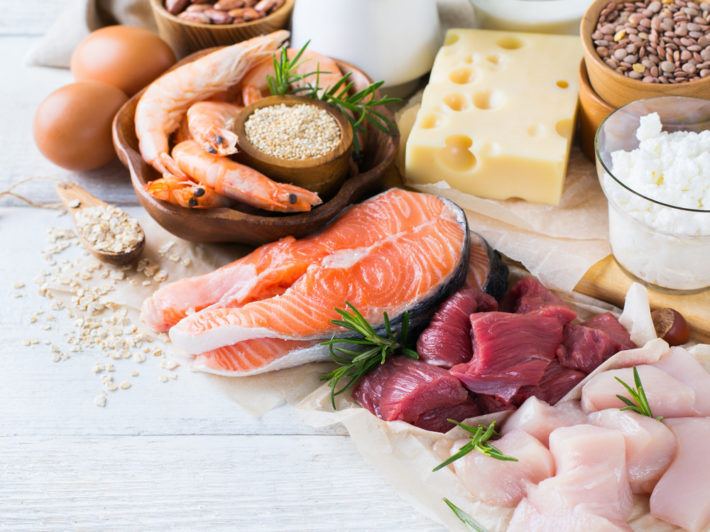
by Milene Brownlow, PhD Nowadays, blogging about ketogenic diets hardly requires an introductory paragraph. Most of us are bombarded with newsletters, emails, and personal stories of how cutting back on carbs and increasing consumption of healthy fats yield remarkable benefits. The popularity of the diet is largely due to its effects on weight loss and improved metabolism. Yet, long before a trending topic on every social media platform, ketogenic diets were specifically, clinically used for seizure control in the treatment…
by Milene Brownlow, PhD Nowadays, blogging about ketogenic diets hardly requires an introductory paragraph. Most of us are bombarded with newsletters, emails, and personal stories of how cutting back on carbs and increasing…


by Ashley Jordan Ferira, PhD, RDN Almost 10% of the US population has diabetes, with another 34% in a precarious state of prediabetes.1 These diagnoses are not destiny. Research demonstrates that lifestyle interventions, particularly those incorporating nutrition therapy, produce clinically meaningful improvements in diabetes.2 Integrating this research foundation into the clinical setting is key. A study used an endocrinology private practice waiting room to deliver weekly group-based nutrition education classes for patients with type 2 diabetes (T2D), examining the effects…
by Ashley Jordan Ferira, PhD, RDN Almost 10% of the US population has diabetes, with another 34% in a precarious state of prediabetes.1 These diagnoses are not destiny. Research demonstrates that lifestyle interventions,…


Obesity and cardiometabolic disease are metabolic perturbations associated with inflammation chronicity. The Western diet is typified by a surplus of calories, low nutritional quality, and high pro-inflammatory potential, thereby fueling excess adiposity, which further leads to inflammation. To break this obesity-inflammation cycle, adopting a healthful dietary pattern and incorporating regular physical activity is critical. Furthermore, identifying foods and nutritional bioactives that can reduce or counteract inflammation is important for the development of targeted nutrition therapies. This blog focuses on a…
Obesity and cardiometabolic disease are metabolic perturbations associated with inflammation chronicity. The Western diet is typified by a surplus of calories, low nutritional quality, and high pro-inflammatory potential, thereby fueling excess adiposity, which…


Host: Deanna Minich, PhD, FACN, CNS Guest: Jeffrey Bland, PhD, FACN, FACB, CNS There has been considerable discussion recently as to what is the best approach in the management of early stage chronic disease- drugs or lifestyle? To help us answer that question, Drs. Deanna Minich and Jeffrey Bland discuss a recent New England Journal of Medicine publication1 by Johns Hopkins Professor of Medicine Andrew P. Feinberg, MD, MPH on the emerging and important role of epigenetics in medicine and…
Host: Deanna Minich, PhD, FACN, CNS Guest: Jeffrey Bland, PhD, FACN, FACB, CNS There has been considerable discussion recently as to what is the best approach in the management of early stage chronic…


by Whitney Crouch, RDN, CLT What is Golden Milk? Popularized across social media, golden milk is a cross-cultural drink originating in Asian countries and consumed for its anti-inflammatory properties and pungent flavor. Also known as “golden milk latte” or “turmeric tea”, golden milk is made with freshly grated or ground turmeric, a pinch of freshly ground pepper, honey or lemon to taste, and hot water, milk, or dairy alternative.1-2 The addition of freshly grated or ground ginger adds extra flavor…
by Whitney Crouch, RDN, CLT What is Golden Milk? Popularized across social media, golden milk is a cross-cultural drink originating in Asian countries and consumed for its anti-inflammatory properties and pungent flavor. Also…


by Bianca Garilli, ND As the rise in obesity continues globally, questions remain: do all people with obesity have increased risk of long-term chronic health conditions, or whether is there a subset of individuals who are healthy despite having obesity? In fact, the concept that “not all obesity is created equally” is emerging in the literature1 to describe individuals with obesity but who do not (yet) carry the markers of disease. This phenomenon is commonly referred to as metabolically healthy…
by Bianca Garilli, ND As the rise in obesity continues globally, questions remain: do all people with obesity have increased risk of long-term chronic health conditions, or whether is there a subset of…


by Ashley Jordan Ferira, PhD, RDN The digestive system begins in the mouth, which is home to 700+ unique species of bacteria.1 Research has shown that salivary2 and gastrointestinal (GI)3-4 microbiota possess diurnal rhythms; whether these daily patterns are a result of circadian biology and/or eating behaviors is unknown. The composition of one’s habitual diet has been shown to impact human GI microbiota, and emerging research suggests that eating frequency and timing of meals may also play a role,3-4 however,…
by Ashley Jordan Ferira, PhD, RDN The digestive system begins in the mouth, which is home to 700+ unique species of bacteria.1 Research has shown that salivary2 and gastrointestinal (GI)3-4 microbiota possess diurnal…


by Lewis Chang, PhD Gut microbiota, a community of trillions of microorganisms living in the gastrointestinal tract, play an important role in health and disease in humans. A loss in species richness and diversity in the microbiota has been associated with many metabolic disorders and disease states.1 Nutrition can have a significant impact on the microbiota composition. The Mediterranean diet is known for its various health benefits.2 However, little is known on how the Mediterranean dietary pattern affects the composition…
by Lewis Chang, PhD Gut microbiota, a community of trillions of microorganisms living in the gastrointestinal tract, play an important role in health and disease in humans. A loss in species richness and…


by Bianca Garilli, ND Body mass index (BMI) is used in the medical community for defining anthropometric height/weight characteristics.1 An individual’s BMI categorizes them as normal, overweight or obese and is often used as a risk factor for various chronic health issues including coronary artery disease (CAD).1 It has become apparent however that BMI is a gross estimate of adiposity; BMI is a poor indicator of percent of body fat and does not indicate site of body fat distribution, an…
by Bianca Garilli, ND Body mass index (BMI) is used in the medical community for defining anthropometric height/weight characteristics.1 An individual’s BMI categorizes them as normal, overweight or obese and is often used…

Metagenics Institute is a trusted, peer-to-peer, evidence-based educational resource for nutrition and personalized medicine.
At Metagenics Institute, we translate credible research with scientific integrity into innovative and actionable clinical
decision-making. Metagenics Institute supports a diverse practitioner base to optimize patient outcomes by shifting existing paradigms in healthcare. Our mission is to transform healthcare by inspiring and educating practitioners, and their patients, about personalized lifestyle medicine.